
The Original Meaning of the Fourteenth Amendment

All citizens of the United States shall have the same right, in every State and Territory, as is enjoyed by white citizens thereof to inherit, purchase, lease, sell, hold, and convey real and personal property.

Civil Rights Act of 1866, 42 U.S.C. § 1982. It’s true: this is (part of) the original meaning of the Fourteenth Amendment.

Now, in a series about Supreme Court jurisprudence, I’d better disclose my receipt of a gift: in 2021, some conservative think tank—I think AEI, but I really don’t recall—offered me, then an attorney at the libertarian Institute for Justice, a free copy of The Original Meaning of the Fourteenth Amendment by Profs. Randy Barnett and Evan Bernick. Randy Barnett wrote the study guide that got me an A- in contracts at Michigan Law, and I worked with Evan at the Institute for Justice in the mid-2010s. Both were, and are, inspiringly smart guys. I accepted.

  • The Federalist Society is a nonpartisan 501(c)(3) nonprofit whose co-chairman, Leonard Leo, also “assisted with the Gorsuch and Kavanaugh Supreme Court selection and confirmation process” and “organized the outside coalition efforts in support of the Roberts and Alito U.S. Supreme Court nominations,” per his official Federalist Society bio (accessed Aug. 30, 2023). Your correspondent was a card-carrying member of the Federalist Society from 2011–17 or so, and appreciates its work—“parts, anyway. I didn’t like seeing Donny go” sneak his enablers a Court seat, as if public opinion matters only when one stands to win rather than lose the power to nominate. “I guess that’s the way the whole durned human comedy keeps perpetuatin’ itself, down through the generations, westward the wagons, across the sands of time until we—ah, look at me. I’m ramblin’ again.” The Stranger, The Big Lebowski (1998).

    For some 40 years now, the Federalist Society has connected lawyers, judges, law students, and policy experts around the idea that the Constitution should be interpreted according to its “original meaning,” which some say courts once neglected to do. This author finds the notion of controversy here a bit stale: federal courts routinely (if imperfectly) strive to give constitutional provisions their intended effect, and I’m aware of no precedent that consciously holds otherwise.

It’s well worth learning the original meaning of the Fourteenth Amendment. The funny thing about some (not all) self-styled “originalists” is that they’re often the same ones attacking “woke” strawmen, years too late for the term’s pop-culture zenith in 2016. It’s funny because, as an original matter, the Fourteenth Amendment is antiracist. I recommend Barnett & Bernick’s book, yet there are plenty of other places one could start.
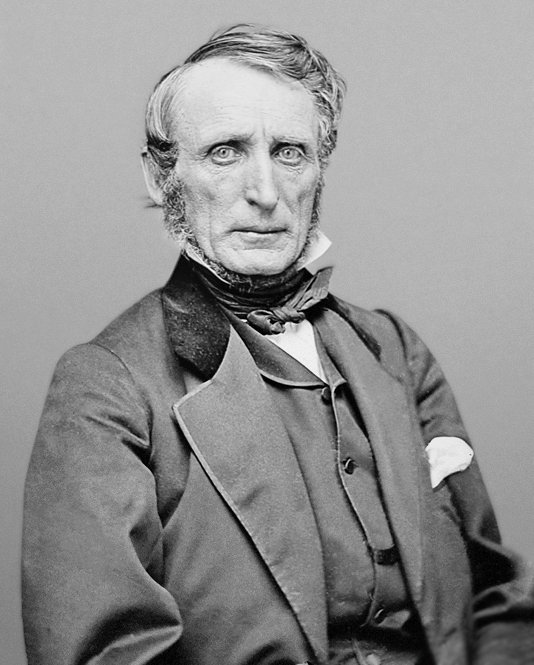
John Bingham, the Ohio congressman who wrote the Fourteenth Amendment.

The Fourteenth Amendment is the most American part of the U.S. Constitution. Federalism: the Swiss. Separation of powers: Montesquieu. Freedom: time immemorial, or at worst the state of nature. Equal protection of the laws: this is America. (Definitely not ancient Athens.) We the People say so.

Now, the Fourteenth Amendment stands for a lot of things. It’s where birthright citizenship comes from, and it’s also what disqualifies insurrectionists from office. See Baude & Paulsen, The Sweep and Force of Section Three, 172 U. Pa. L. Rev. (forthcoming 2024). But we’ll spend the next three posts exploring just the second sentence of Section One, which does much—maybe most—of the constitutional work you’ve ever read or heard about:

No State shall make or enforce any law which shall abridge the privileges or immunities of citizens of the United States; 

nor shall any State deprive any person of life, liberty, or property, without due process of law; 

nor deny to any person within its jurisdiction the equal protection of the laws.

U.S. Const., amdt. XIV, § 1 (line breaks added). These three clauses stand, respectively, for freedom, the rule of law, and equality. Each clause has a name: the Privileges or Immunities Clause; the Due Process Clause;  and the Equal Protection Clause. The United States Reports tell their story.

The original meaning of the Fourteenth Amendment was, in part, to constitutionalize the Civil Rights Act of 1866. See, e.g., Barnett & Bernick, supra. That’s the federal statute, still in force today, that the Supreme Court upheld (as enforcing the Thirteenth Amendment) in Jones v. Alfred H. Mayer Co., 392 U.S. 409, 437–44 (1968). The upshot is that, even if Congress repealed the Civil Rights Act of 1866—and it certainly has not—the Fourteenth Amendment would still mandate equal protection for the right to “inherit, purchase, lease, sell, hold, and convey” a home. 42 U.S.C. § 1982.

Think about that.

The Right to Inherit, Purchase, Lease, Sell, Hold, and Convey a Home

We need to talk about the Constitution. Enough with California and its mixed bag of housing elements, at least for a while. This post will begin a series of discussions about federal law and how housing prohibition came to be—and what we can do about it.

I’d like to keep this simple, but there’s just too much legal history. One hard lesson of this job has been that even dyed-in-the-wool housing activists don’t always believe the Constitution has any relevance to housing, and don’t always know that the concept of “equal protection” comes from the Fourteenth Amendment. Housers might have heard of the Fair Housing Act, but may not understand what it covers or how it’s enforced, let alone why it was thought to be an improvement when it passed in 1968.

We’ll get to the Fair Housing Act in the future. Today, though, let’s start where Richard Rothstein starts in The Color of Law, with an underheralded case called Jones v. Alfred H. Mayer Co., 392 U.S. 409 (1968). The case, which remains good law, is a big deal because it affirms a broad reading of the Thirteenth Amendment—the one that abolished slavery—en route to upholding an important federal statute called the Civil Rights Act of 1866.

WHAT’S JONES GOT TO DO WITH IT?

Jones is one of those Supreme Court cases that seems like such an easy call that it’s hard to comprehend its significance: the defendants refused to sell Joseph Jones a home “for the sole reason” that Jones was Black, 392 U.S. at 412, and the Supreme Court held that properly gave rise to a housing-discrimination case. Duh, right?

That was certainly the feeling of the Reconstruction Congress when it enacted the Civil Rights Act of 1866. Also known as “Section 1982,” this landmark statute is still part of today’s U.S. Code. Section 1982 provides that:

All citizens of the United States shall have the same right, in every State and Territory, as is enjoyed by white citizens thereof to inherit, purchase, lease, sell, hold, and convey real and personal property.

42 U.S.C. § 1982; see Jones, 392 U.S. at 412. The Fair Housing Act didn’t yet exist in the mid-’60s, when the Mayer Company refused to sell Jones his home, so he challenged their refusal by bringing a federal action under Section 1982. 

Jones’s lawsuit confronted the federal courts with some sticky questions about Congress’s power to enact the Civil Rights Act of 1866, and what that meant for Jones. Under the Constitution, Congress’s powers are enumerated, which is legalese for “Congress can’t pass a law unless the Constitution gives Congress the authority.” Congress can’t, for example, incorporate a new town in Arkansas—the Constitution doesn’t give it the authority; that’s a job for the State of Arkansas. In practice, most federal statutes today are justified under the Commerce Clause in Article I, which is a story you can read about elsewhere. In Jones, the issue was whether Section 1982 was justified under Congress’s authority to enforce the Thirteenth Amendment. Jones held that it was. 392 U.S. at 437–44.

This matters because the Supreme Court has bungled the Constitution on occasion. Jones corrected a bad chapter in the Thirteenth Amendment’s story.

After the Thirteenth Amendment formally ended slavery in 1865, the country spent decades—still is—grappling with what it means to have abolished its original sin. The Thirteenth Amendment enables Congress to enforce abolition “by appropriate legislation,” and between 1866–75, Congress enacted not one, but several Civil Rights Acts. These acts did not take a narrow view of abolition. Beyond prohibiting the most overt forms of slavery as had been practiced on the most abusive plantations, Congress intended to outlaw the subtler “badges and incidents” of slavery as well. But in The Civil Rights Cases, 109 U.S. 3 (1883), the Supreme Court invalidated the Civil Rights Acts’ various bans on private racial discrimination, undoing Reconstruction and heralding the rise of Jim Crow. This is why, more than a decade after public-school segregation was struck down in Brown v. Board of Education, 347 U.S. 483 (1954), a simple housing-discrimination case still had to be appealed all the way up to the Supreme Court. Jones overruled the Civil Rights Cases, upholding Section 1982—the Civil Rights Act of 1866—as a valid exercise of Congress’s power to root out the “badges and incidents of slavery” pursuant to the Thirteenth Amendment. 392 U.S. at 409 & n.78.

SECTION 1982, THEN AND NOW

While Jones was being argued in the spring of 1968, Congress was debating what would become the Fair Housing Act. Both Congress and the Supreme Court were aware of each others’ deliberations, and the decision was handed down shortly after the FHA became law. See id. at 413–17. Neither Jones nor the FHA limit each others’ scope, or that of Section 1982. Id. Yet after the FHA was passed, litigants mostly stopped litigating Section 1982. The caselaw simply trails off.

Fifty-five years after Jones and the FHA, America’s housing crisis has gotten worse. Although private housing discrimination is still with us, it’s clearly not the only culprit. We can’t solve today’s housing crisis without tackling the ubiquitous public housing discrimination—segregating the apartments from the plantation homes—that the FHA, a product of its time, wasn’t originally meant to address.

Still, federal law expressly protects the right to inherit, purchase, lease, sell, hold, and convey a home. 42 U.S.C. § 1982. Jones holds that Section 1982 “bars all racial discrimination, private as well as public.” 392 U.S. at 413. Good. The Reconstruction Congress that enacted it would never have approved of federal and local bureaucrats colluding to segregate neighborhoods by race, as happened in redlining’s heyday between the 1930s and the 1960s. As The Color of Law shows, the badges and incidents of redlining live on in today’s zoning codes. They invite action under Section 1982. 

***

Jones is a Thirteenth Amendment case, but it could have just as well been a Fourteenth Amendment case. Id. at n.5. The Fourteenth is the most important amendment in the Constitution, and we’ll start exploring it in our next post.

It's July 3.

In early February, we sued four Bay Area cities for breaking California’s housing law. They all missed a deadline to update their housing plans. Every city admitted, in court, that it missed this deadline.

We have not won any of these cases (yet). Here’s Cupertino, arguing why we can’t win such a case:

The law says we get a hearing within 120 days of requesting one, but the superior court will not decide the case until Cupertino prepares an administrative record. We objected that no record is needed; the city admitted the only important fact.

We have no further comment (yet).